Why Your Garage Floor Deserves More Than Just Paint
Garage floors take a beating. Hot tires, dropped tools, oil drips, salt-covered boots in winter — the list of daily abuses never really ends. Most homeowners eventually notice the signs: a dull, cracked, or peeling floor that looks tired no matter how often it’s swept. The usual fix, a coat of epoxy or paint, often fades fast and chips under pressure.
That’s where Carbon Concrete Coatings comes in. Specializing in durable, high-performance garage floor solutions, the company has built a reputation for transforming worn concrete into surfaces that look showroom-ready and hold up to real-world wear. Their approach goes beyond cosmetic fixes, focusing on coatings engineered to outperform traditional options in strength, flexibility, and longevity.
This post breaks down what makes a quality garage floor coating worth the investment, what sets Carbon Concrete Coatings apart, and how homeowners can finally stop dreading the state of their garage.
The Problem With Traditional Garage Floor Finishes
Epoxy has long been the default choice for garage floors, and it’s easy to see why. It’s affordable, relatively easy to apply, and gives concrete a glossy, finished look. But epoxy has real limitations.
It’s brittle. Hot tires can leave permanent marks. UV exposure causes yellowing over time. And epoxy coatings are notoriously slow to cure, often requiring days before the garage is usable again. For homeowners who rely on their garage daily, that downtime is a real inconvenience.
Bare concrete isn’t a better alternative either. Unsealed concrete absorbs oil stains, cracks under temperature swings, and produces fine dust that spreads throughout the garage and into the home. Neither option delivers the durability that a hardworking garage space actually needs.
What Makes a Coating Actually Durable?
A garage floor coating needs to handle more than foot traffic. It needs to withstand vehicle weight, chemical spills, temperature extremes, and constant friction — all without cracking, peeling, or discoloring.
The best coatings share a few key characteristics:
- Chemical resistance: Protection against oil, gasoline, antifreeze, and cleaning solvents.
- UV stability: Resistance to yellowing or fading from sunlight exposure, especially in garages with windows or frequent door openings.
- Flexibility: The ability to expand and contract with concrete without cracking.
- Fast cure time: Less downtime means less disruption to daily life.
- Slip resistance: A textured finish that stays safe even when wet.
This is exactly where many standard coatings fall short, and exactly where Carbon Concrete Coatings has focused its product development.
How Carbon Concrete Coatings Delivers a Better Result
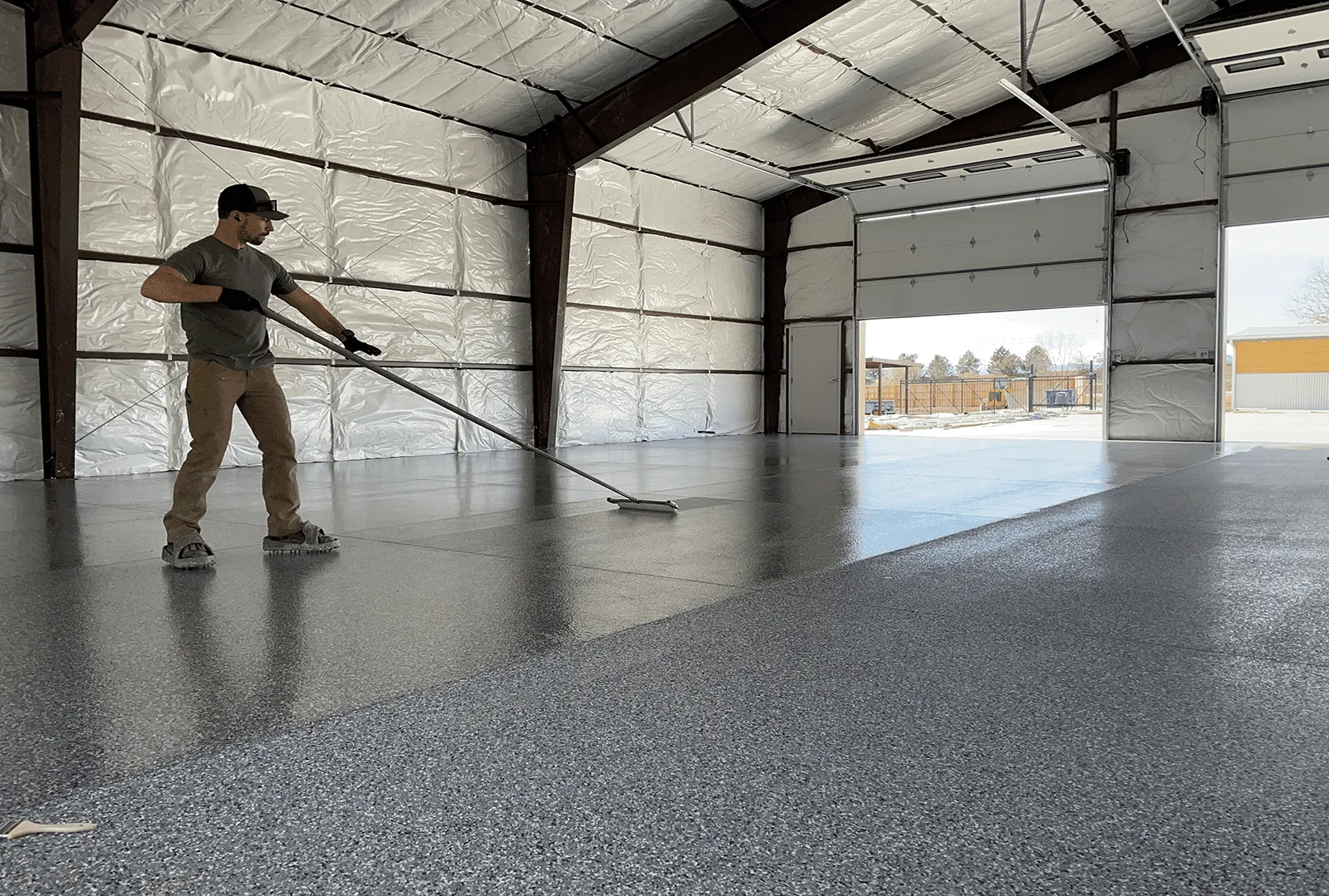
Carbon Concrete Coatings doesn’t rely on one-size-fits-all solutions. Every project starts with a thorough evaluation of the existing concrete, including moisture testing and surface preparation through diamond grinding. This step alone sets the foundation for a coating that actually bonds and lasts, rather than one that looks good for a few months before lifting at the edges.
The company’s application process is built around precision. Multiple layers are applied with attention to thickness and curing time, resulting in a finish that’s not only visually impressive but structurally sound. Customers consistently note the difference in texture and resilience compared to big-box store kits or generic contractor jobs.
Beyond the technical process, Carbon Concrete Coatings offers a range of finishes and color options, allowing homeowners to customize their garage to match personal style or complement a broader home renovation. Flake systems, solid colors, and metallic finishes are all available, giving customers flexibility without compromising on performance.
Why Polyaspartic Coatings Are Changing the Game
A tough, fast-curing finish that resists hot tire marks, chemical spills, and fading is exactly what makes polyaspartic garage floor coating stand out from traditional epoxy systems. Unlike epoxy, which can take days to cure and remains vulnerable to UV damage, polyaspartic coatings cure in a matter of hours and maintain their color and clarity for years.
This matters because garages aren’t just storage spaces anymore. They’re workshops, home gyms, and extensions of living space. A coating that holds up to that kind of versatility, without yellowing, cracking, or peeling, protects the investment homeowners make in their property.
Carbon Concrete Coatings has built its reputation around this exact technology, offering customers a finish that performs under pressure and still looks sharp years down the line.
Give Your Garage the Upgrade It Deserves
A garage floor shouldn’t be an afterthought. It’s one of the most heavily used surfaces in any home, and it deserves a finish that can keep up. With Carbon Concrete Coatings, homeowners get more than a quick fix. They get a long-term solution built on proven materials, careful preparation, and a finish that genuinely performs.
If your garage floor is cracked, stained, or simply outdated, it might be time for an upgrade that actually lasts. Reach out to Carbon Concrete Coatings to learn more about their process and get a personalized recommendation for your space.
FAQ
How long does a polyaspartic coating take to cure?
Most polyaspartic coatings cure within 24 hours, allowing homeowners to use their garage again far sooner than with traditional epoxy systems.
Will the coating crack over time?
Properly applied polyaspartic coatings are designed to flex with concrete, significantly reducing the risk of cracking compared to rigid epoxy finishes.
Can Carbon Concrete Coatings match my home’s style?
Yes. The company offers multiple color and finish options, including flake and metallic systems, so the final result can complement your home’s overall aesthetic.
Is the coating safe for everyday vehicle use?
Yes. Polyaspartic coatings are built to withstand vehicle weight, hot tires, and regular foot traffic without degrading.
For More Must Visit: Wyf Meaning