Why Toilet Replacement Could Be the Smartest Upgrade for Your Bathroom
Few things disrupt a household faster than a toilet that just won’t cooperate. Maybe yours runs constantly, wobbles when you sit down, or has developed a hairline crack that seems to grow a little more every week. Whatever the symptom, the underlying message is usually the same: it’s time for a new one.
A toilet replacement isn’t just about fixing an annoyance. It’s an opportunity to improve water efficiency, update the look of your bathroom, and avoid the far costlier headache of a sudden failure. At Delta Plumbing, Repipe and Drains, we see firsthand how homeowners put off this decision until a minor issue becomes a major one. This guide walks through the signs that your toilet needs replacing, what the process actually involves, and why trusting a professional team makes all the difference.
How Do You Know When a Toilet Needs to Be Replaced?
Toilets are built to last, but they don’t last forever. Most porcelain fixtures have a functional lifespan of 25 to 30 years, though the internal components often wear out much sooner. Here are the clearest signs that replacement, not repair, is the right call:
- Frequent clogs or weak flushes: If plunging has become part of your daily routine, the flushing mechanism may be failing beyond simple fixes.
- Visible cracks: Even small cracks in the porcelain can expand over time, eventually leading to leaks or a complete break.
- Constant running water: A toilet that runs long after flushing wastes gallons of water every day and can quietly inflate your utility bill.
- Rocking or instability: A toilet that wobbles may indicate a damaged flange or subfloor, which worsens the longer it’s left unaddressed.
- Outdated water usage: Older toilets can use up to 6 gallons per flush, while modern models use as little as 1.28 gallons without sacrificing performance.
If any of these sound familiar, it’s worth having a professional take a closer look before the issue escalates.
What Does the Toilet Replacement Process Look Like?
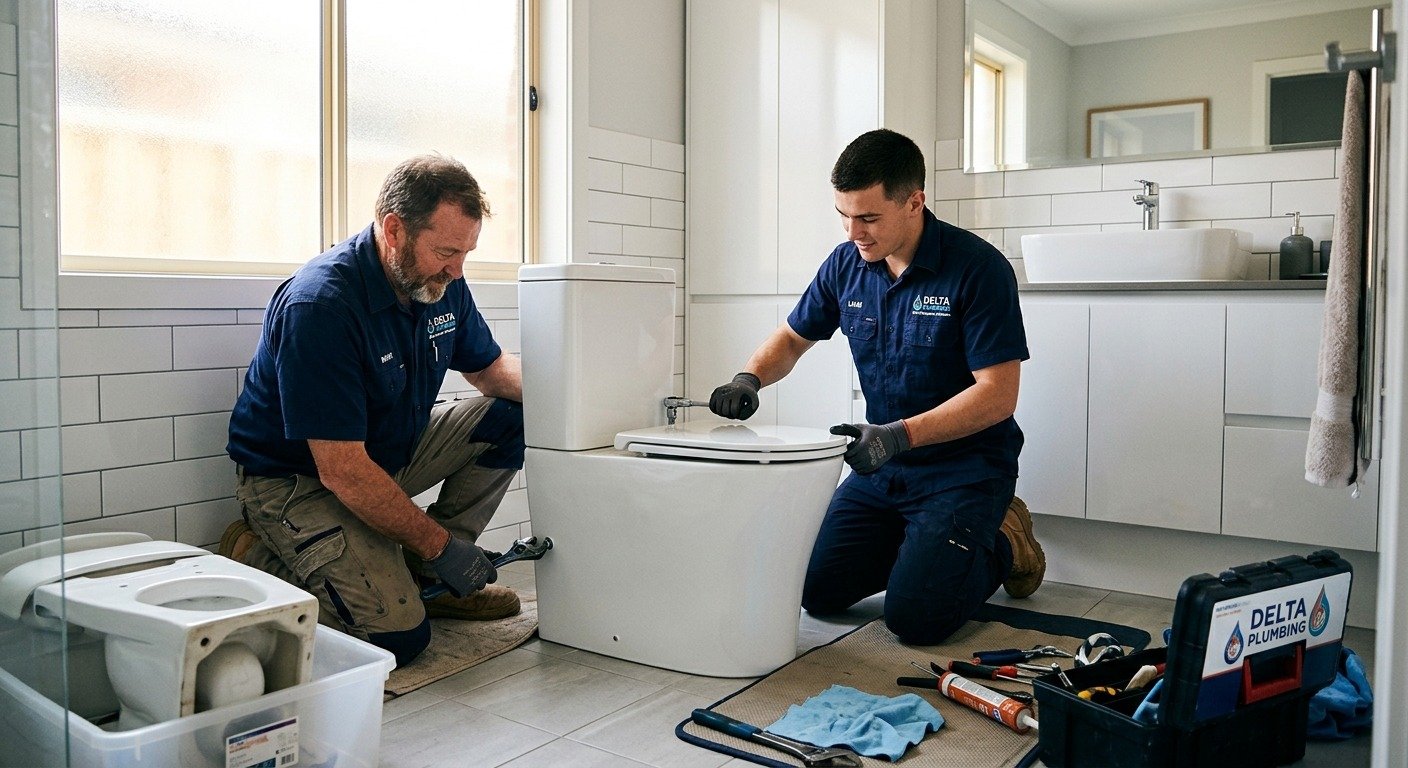
Replacing a toilet might sound like a simple weekend project, but doing it correctly involves more than unscrewing a few bolts. The process typically includes:
Assessing the Existing Setup
Before removing anything, a plumber examines the current toilet, flange, and flooring to identify any underlying damage. Subfloor rot or a cracked flange, for example, needs to be addressed before a new toilet is installed, otherwise the same problems will resurface.
Removing the Old Fixture
The old toilet is carefully disconnected from the water supply and unbolted from the floor. This step requires care to avoid damaging tile, flooring, or plumbing connections underneath.
Installing the New Toilet
Once the area is prepped, the new toilet is set in place, sealed, and connected to the water line. Proper sealing is critical here. A poorly sealed toilet can leak at the base, leading to water damage that’s far more expensive to repair than the toilet itself.
Testing for Performance
A thorough test flush ensures the new toilet functions properly, seals correctly, and doesn’t leak at any connection point.
Each of these steps matters. Skipping even one can lead to a toilet that looks fine on the surface but causes damage underneath, often invisible until it’s too late.
Why Choose a Professional for Your Toilet Replacement?
DIY projects have their place, but toilet installation is one area where professional expertise pays off. A plumber doesn’t just install the fixture; they identify issues you might not even know to look for, like a deteriorating wax ring, an uneven floor, or outdated plumbing connections that could affect long-term performance.
Choose professional installation if you want the job done right the first time, with a warranty backing the work and an expert eye catching problems before they become expensive repairs. On the other hand, a simple seat or lid replacement might be reasonable to tackle yourself. For anything involving the base, flange, or water connections, professional help is almost always worth the investment.
Upgrade with Confidence: A Smarter, More Comfortable Bathroom Starts Here
Toilet Replacement offers a practical way to improve your bathroom’s appearance, boost water efficiency, and prevent recurring plumbing problems that can cost you more over time. Rather than waiting for a crack to cause water damage or a constantly running toilet to increase your utility bills, upgrading at the right time helps you save water, reduce unnecessary expenses, and enjoy greater reliability and peace of mind.
At Delta Plumbing, Repipe and Drains, our team specializes in handling every part of this process, from evaluating your current setup to installing a new, water-efficient toilet that fits your bathroom and budget. We know that inviting a plumber into your home should feel simple and stress-free, which is why we focus on clear communication, tidy workmanship, and lasting results.
If your toilet has been giving you trouble, don’t wait for it to become an emergency. A quick inspection today could save you from a much bigger repair tomorrow, and a new, efficient toilet might be closer and more affordable than you think.
Frequently Asked Questions
How long does a toilet replacement typically take?
Most toilet replacements are completed within one to two hours, assuming there are no underlying issues with the flange or subfloor. More complex situations, such as flooring repairs, may extend the timeline.
Is it worth replacing an old toilet that still works?
Yes, especially if it’s an older model. Newer toilets use significantly less water per flush, which can lead to noticeable savings on your water bill over time while reducing unnecessary waste.
Can a cracked toilet be repaired instead of replaced?
Small surface scratches may not require replacement, but any crack that extends through the porcelain typically cannot be safely repaired. Cracks tend to worsen over time and can lead to leaks.
What should I do if my new toilet leaks at the base?
A leak at the base usually signals a sealing issue with the wax ring or an uneven installation. This should be addressed quickly to prevent water damage to the surrounding flooring.
Do I need a plumber for a simple toilet swap?
While some homeowners attempt it themselves, a professional ensures the flange, seal, and water connections are properly handled, reducing the risk of leaks or future repairs.
FOR MORE VISIT: Wyf Meaning