Why Healthy Trees Start with the Right Pruning Technique
Trees are more than just greenery in your yard — they’re long-term investments in your property’s beauty, shade, and value. Yet many homeowners overlook one of the simplest ways to protect that investment: regular, professional pruning. Left unchecked, even a healthy-looking tree can develop weak limbs, disease, or structural issues that become costly or dangerous down the road.
Pruning isn’t about chopping off branches at random. It’s a careful, science-backed process that shapes a tree’s growth, removes hazards, and keeps it thriving for decades. Whether you’re dealing with a young oak that needs training or a mature elm with overgrown limbs, understanding how proper pruning works can save you time, money, and heartache.
In this post, we’ll break down why pruning matters, when to do it, and how working with trained arborists can make all the difference for the long-term health of your landscape.
What Does Pruning Actually Do for a Tree?
Pruning removes dead, diseased, or damaged branches before they become bigger problems. But its benefits go far beyond aesthetics. When done correctly, pruning improves air circulation through the canopy, reduces the risk of fungal infections, and encourages stronger, more balanced growth patterns.
It also plays a safety role. Overgrown or weak branches can snap during storms, putting your home, car, or family at risk. Routine pruning identifies these hazards early, before they turn into expensive emergencies.
For fruit trees and flowering species, pruning timing and technique directly affect yield and bloom quality. Cut at the wrong time, and you might accidentally remove the buds that would have produced next season’s fruit or flowers.
How Often Should Trees Be Pruned?
Most established trees benefit from pruning every 3 to 5 years, though younger trees often need more frequent attention to establish strong structure early on. Species that grow quickly, like silver maples or poplars, may require annual check-ins to manage their rapid growth.
Here are a few signs it’s time to schedule a pruning session:
- Branches are crossing or rubbing against each other
- Dead or discolored limbs are visible
- The canopy looks unbalanced or overly dense
- Branches are growing too close to power lines, roofs, or walkways
- You notice fungal growth or unusual bark damage
Ignoring these warning signs doesn’t just affect the tree’s appearance. It can shorten its lifespan and create liability issues if a branch falls and causes damage.
The Risks of DIY Pruning
It’s tempting to grab a ladder and a pair of shears and handle pruning yourself, especially for smaller trees. But improper cuts can do more harm than good. Cutting too close to the trunk, leaving stubs, or removing too much foliage at once can stress the tree and invite pests or disease.
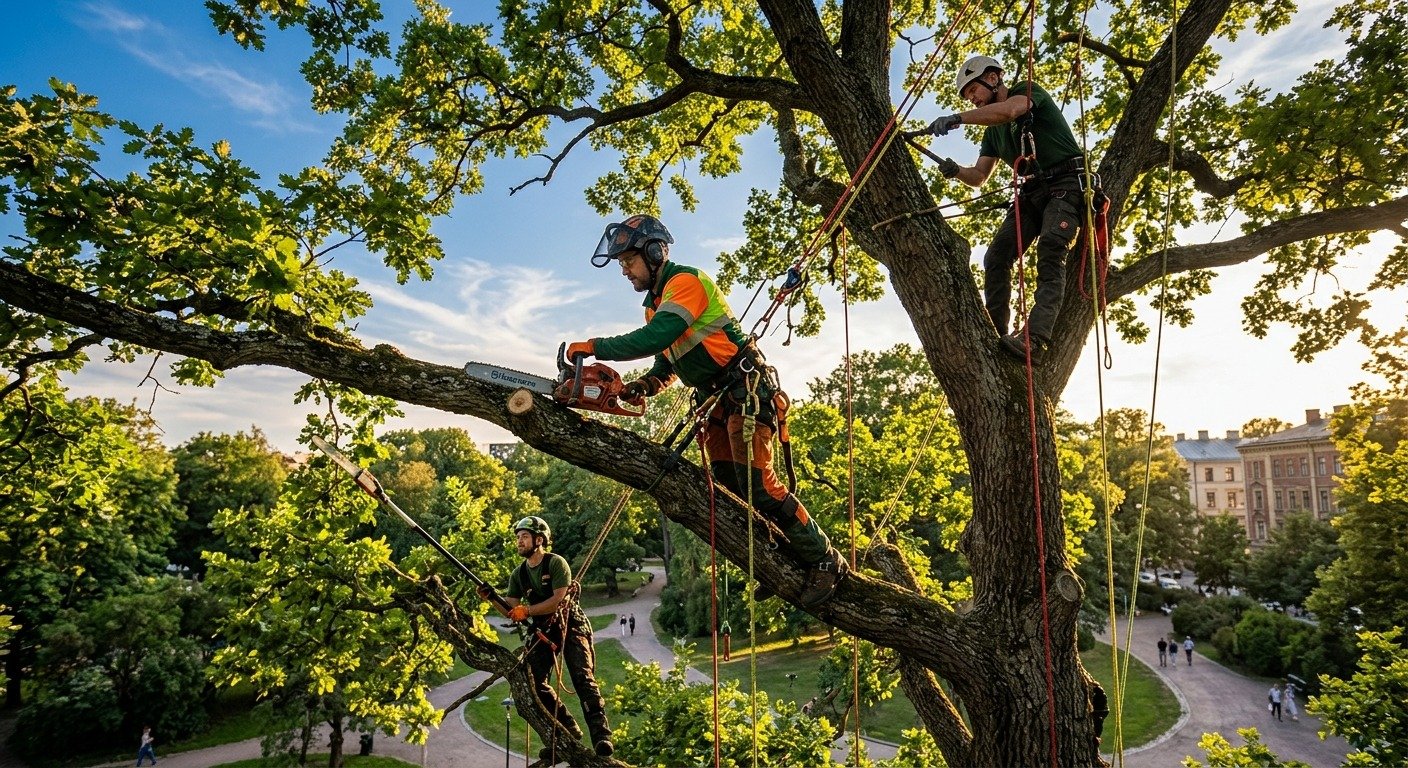
There’s also the physical risk to consider. Tree work involves heights, power tools, and unpredictable branch weight distribution. Every year, homeowners are injured attempting pruning jobs that would have been far safer left to trained professionals with the right equipment and climbing experience.
Larger trees present even greater challenges. Branches near rooflines or utility wires require precision and specialized knowledge to remove safely, without damaging property or risking electrocution.
Choosing the Right Approach for Your Landscape
Not every tree needs the same treatment. A young ornamental tree might only need light shaping to encourage a strong central leader, while a mature shade tree may require selective thinning to reduce wind resistance and prevent limb failure.
Certified arborists assess each tree individually, factoring in species, age, location, and overall health before making a single cut. This tailored approach ensures the tree responds well to pruning rather than suffering unnecessary stress.
Choose a more aggressive pruning schedule if your tree is recovering from storm damage or disease. Choose a lighter, maintenance-focused approach if your tree is already healthy and simply needs shape control. The right strategy depends on what your landscape actually needs, not a one-size-fits-all formula.
Why Professional Expertise Makes the Difference
Tree Pruning helps preserve the long-term health, strength, and natural beauty of your trees through careful, professional care tailored to their specific needs. Austin Tree Specialists brings years of hands-on experience caring for trees across Central Texas, with certified arborists who understand how local soil conditions, changing weather patterns, and native tree species influence the most effective pruning techniques. This thoughtful approach promotes healthy growth, reduces potential hazards, and keeps your landscape looking its best throughout the year.
Austin Tree Specialists takes a methodical approach to every job, inspecting each tree’s structure, identifying risk factors, and using techniques designed to promote healthy, sustainable growth. Their team arrives equipped with the right tools and safety protocols to handle everything from small ornamental trees to towering oaks, ensuring the job gets done efficiently and without unnecessary damage to your property.
Homeowners who partner with experienced professionals often see noticeable improvements in tree vigor, canopy balance, and overall yard safety within a single season. It’s an investment that pays off not just in curb appeal, but in protecting your property from the risks that come with neglected trees.
Keeping Your Trees Thriving for Years to Come
Healthy trees don’t happen by accident. They’re the result of consistent care, informed decisions, and timely maintenance that addresses issues before they escalate. Pruning is one of the most effective tools available for keeping your landscape safe, attractive, and resilient against disease and storm damage.
If your trees haven’t been inspected in a while, now is a great time to schedule an assessment. A trained eye can catch early warning signs that are easy to miss, and a proactive pruning plan can add years to your trees’ lives while boosting your property’s overall appeal.
Reach out to a trusted local tree care provider to get a professional evaluation and keep your landscape looking its best for seasons to come.
Frequently Asked Questions
What’s the best time of year to prune trees?
Late winter or early spring, while trees are dormant, is generally ideal for most species. This timing minimizes stress and allows the tree to heal quickly as new growth begins.
Can pruning harm a tree if done incorrectly?
Yes. Improper cuts, over-pruning, or cutting at the wrong time of year can stress a tree, stunt growth, or open it up to disease and pest infestations.
How much does professional tree pruning typically involve?
The process usually includes an inspection, hazard assessment, selective branch removal, and cleanup. The scope depends on the tree’s size, species, and condition.
Is pruning necessary for young trees?
Absolutely. Early pruning helps establish strong structure, which reduces the likelihood of structural problems as the tree matures.
FOR MORE VISIT: Wyf Meaning