Why Corral Panels Are Specified for Impact Load Rather Than Static Load
Anyone who has watched a steer hit a fence line understands why this equipment is built the way it is. A thousand-pound animal moving at speed delivers a load that has nothing to do with the weight of that animal standing still, and a panel engineered for the static case folds.
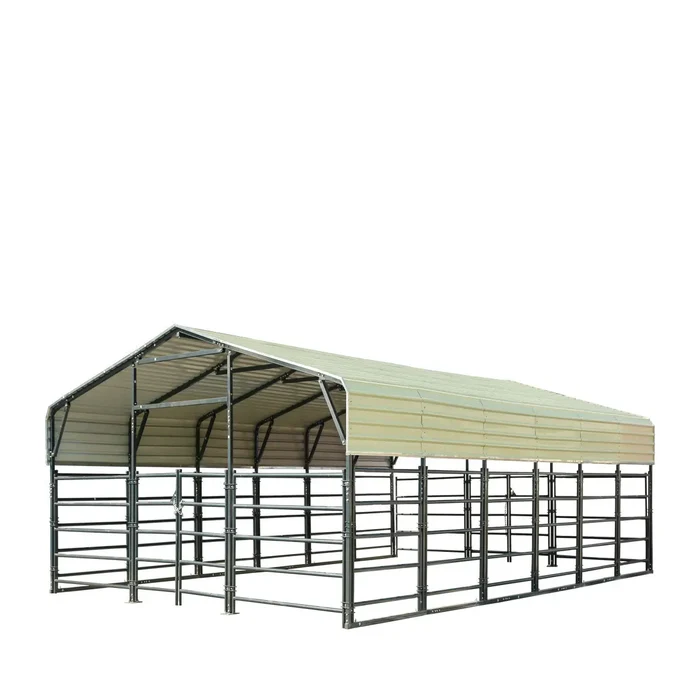
That distinction runs through every specification in this category. A livestock corral panel metal shed combines a shelter frame with handling panels, and those panels are sized for the moment an animal decides to go through rather than for the hours it spends leaning on them.
What an Impact Actually Does
Stopping Distance Sets the Peak
Impact force on corral panels depends on how quickly the animal stops, not just on its mass and speed. A rail that flexes spreads the stop over a longer distance and lowers the peak force, which is why a slightly springy panel survives hits a rigid one does not.
Wall Thickness Over Diameter
A large-diameter thin-wall rail looks substantial and dents permanently on the first solid hit, while a smaller tube with a heavier wall flexes and returns. Asking about wall thickness is more informative than looking at the panel.
Welds Concentrate the Load
The rail-to-upright joint is where bending moment is highest and where failures gather. A continuous weld around the joint distributes it, and a tack on two sides becomes a hinge, which is visible on inspection in about two minutes.
Coating Decides the Decade
Galvanizing protects by sacrificing zinc and the coating weight sets service life. Panels standing in manure and urine corrode faster at ground contact than anywhere else, and panels with closed bottom rails trap moisture and go first.
Rail Count and Spacing by Species
Rail spacing is a containment specification, not an aesthetic one.
Different stock need different layouts:
• Cattle: few rails, widely spaced, strong
• Sheep and goats: narrow gaps they cannot push through
• Calves: a bottom rail set low enough
• Horses: taller, closely railed, visible
Corral panels for mixed stock need more rails rather than taller ones. Cattle rarely jump and will push, so moderate height with strong rails works. Horses will jump and are injured by rails they cannot see, which is why equine panels run taller and are usually solid or closely railed near the bottom.
Bottom rail clearance causes the most trouble. Set high and young stock walk under, set at ground level and the rail corrodes while the panel cannot be moved over uneven ground, so a compromise around hock height is the usual answer.
Turning Panels Into a Structure
Connections Carry the Line
A single panel is not a structure. Corral panels become one through their connections, and pin-and-loop joints that allow some articulation let a run follow uneven ground while transferring load along the line rather than into one upright.
Corners and Gates Take More
A corner post takes thrust from two directions and a gate hinge takes the cantilevered weight of the leaf plus whatever an animal does to it. Both want bracing or a driven post rather than relying on adjacent panels.
Bolting to a Shed Frame
Fixing livestock panels to a building frame transfers animal impact into that structure. That is fine if the frame was designed for it and is not if the panels were added later, which is worth checking rather than assuming.
Handling Stock Without Injury
The Gateway Is the Risk
Most injuries in yards happen in the gateway rather than in the pen. A handler caught between a closing gate and a panel, or in a race with no escape, is the recurring incident, and designed escape gaps at intervals are the accepted control.
Layout Beats Strength
Stock move away from a handler and toward open space and light, and a yard laid out with that in mind needs less force. Less force means less impact on the panels and fewer people standing in pinch points.
Solid Against Open Deliberately
Sheeting the lower portion where stock should not see out keeps them moving forward, while open rails where they should see the next pen draws them on. Cattle panels in a race benefit from the first and pens benefit from the second.
Where Corral Systems Are Going
The direction is toward modular yards that bolt to a shelter frame rather than standing separately, which is what this product represents, and toward galvanized rather than painted finishes as owners price the second repaint. Hydraulic and self-catching head gates have moved down from commercial feedlots into smaller operations.
For a buyer the useful questions are wall thickness, rail spacing and how panels connect. TMG Industrial publishes panel dimensions, rail configuration and the shed frame specification together, which allows a yard to be matched to the stock that will use it.