Why Regular Generator Maintenance Keeps Your Power Reliable
When the lights go out, a generator is the difference between inconvenience and a genuine crisis. Yet many homeowners and business owners treat their backup power systems as a “set it and forget it” purchase, only remembering they exist the moment a storm knocks out the grid. That’s precisely when a neglected unit is most likely to fail.
At Boudreaux’s Electrical Services, we’ve seen firsthand how a few simple maintenance habits can mean the difference between a generator that roars to life and one that sits silent when you need it most. This post walks through what proper generator upkeep actually involves, why it matters more than most people realize, and how a consistent maintenance schedule protects both your investment and your peace of mind.
What Happens When a Generator Is Left Unmaintained?
Generators are mechanical systems with moving parts, fuel lines, batteries, and electrical components, all of which degrade over time. Dust accumulates in the air filters. Oil breaks down and loses its lubricating properties. Batteries lose charge capacity. Fuel can go stale, especially in units that sit idle for months between uses.
The result? A generator that either fails to start during an outage or shuts down partway through, leaving you exactly where you started. Worse, a poorly maintained generator can pose safety risks, including carbon monoxide buildup, electrical fires, or fuel leaks. None of these are problems you want to discover during an actual emergency.
How Often Should a Generator Be Serviced?
Most manufacturers recommend a professional inspection at least once a year, with additional checks every 100 to 200 hours of run time for units used frequently. For standby generators that only activate during outages, an annual tune-up is usually sufficient to catch small issues before they become expensive failures.
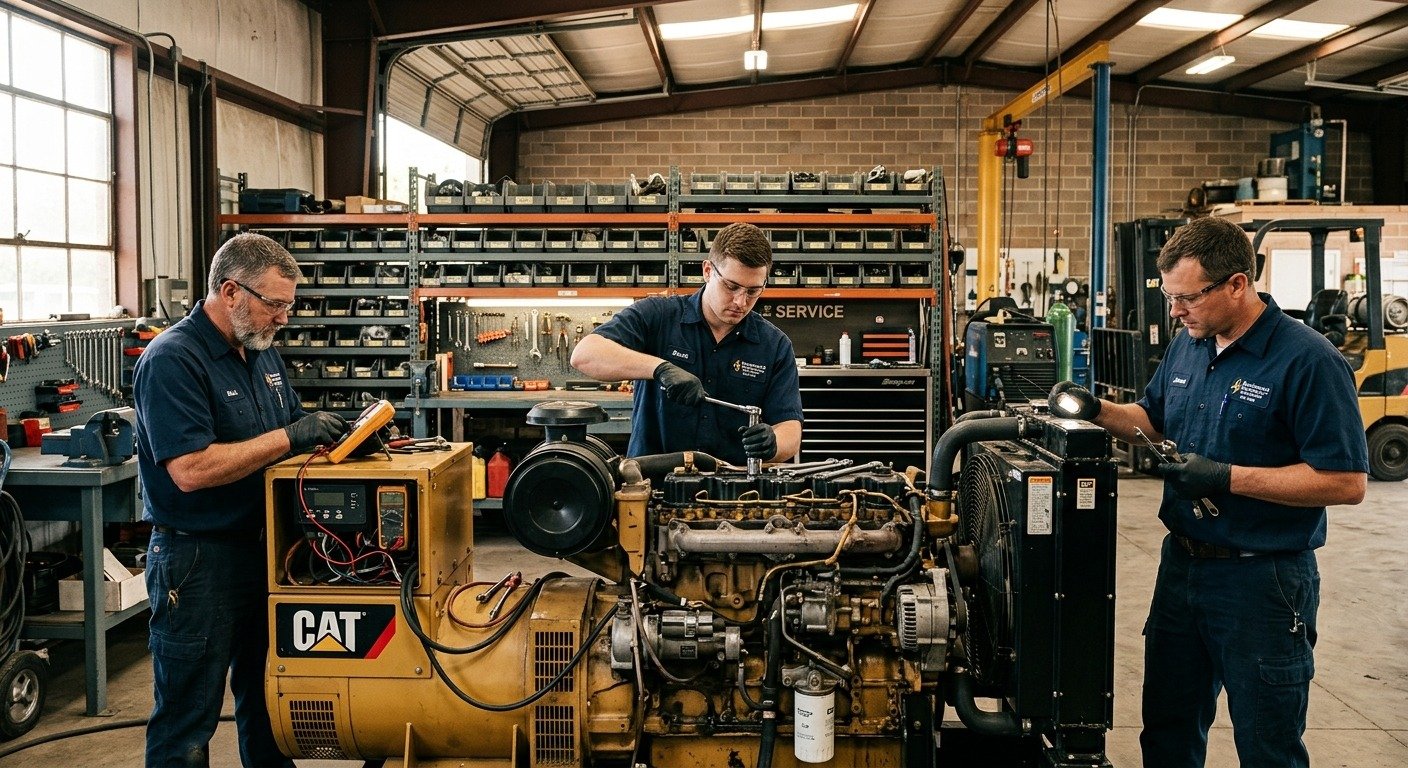
A thorough service typically includes:
- Checking and changing the oil and oil filter
- Inspecting and replacing air and fuel filters as needed
- Testing the battery and charging system
- Examining spark plugs and ignition components
- Verifying coolant levels and inspecting the cooling system
- Running a load test to confirm the unit performs under real demand
- Inspecting the exhaust system for leaks or blockages
Skipping any of these steps increases the odds of an unpleasant surprise down the road.
Why DIY Maintenance Only Goes So Far
Plenty of generator owners handle basic upkeep themselves, and that’s a reasonable starting point. Checking oil levels, keeping the unit clean, and running it periodically are tasks most people can manage without specialized training.
However, certain aspects of generator maintenance require technical expertise and the right diagnostic equipment. Electrical connections, transfer switches, and load testing all demand a trained eye to catch problems that aren’t visible during a casual inspection. A technician who works on generators regularly will spot early warning signs, like a slightly corroded terminal or a battery that’s holding charge but losing capacity, long before they turn into full system failures.
This is where professional service pays for itself. A properly trained technician doesn’t just perform a checklist; they understand how each component interacts with the rest of the system and can make judgment calls that a general inspection might miss.
What Are the Benefits of Professional Generator Upkeep?
Beyond simply avoiding breakdowns, consistent professional maintenance offers several practical advantages:
Extended equipment lifespan. Generators represent a significant investment, and proper care can add years to their operational life. Regular servicing reduces wear on internal components, which means fewer costly repairs and a longer window before replacement becomes necessary.
Improved fuel efficiency. A well-maintained generator burns fuel more efficiently than one with clogged filters or worn components. Over time, this translates into real savings, particularly for businesses that rely on generators for extended periods during outages.
Reduced risk of unexpected failure. The entire purpose of a backup generator is reliability during emergencies. Routine maintenance dramatically lowers the odds of a failed start or mid-use shutdown when you’re counting on the unit most.
Compliance and warranty protection. Many manufacturer warranties require documented, regular maintenance to remain valid. Skipping scheduled service could leave you paying out of pocket for repairs that would otherwise be covered.
Safety for your household or business. Faulty wiring, fuel leaks, and ventilation issues are genuine hazards. Professional inspections catch these risks before they escalate into something dangerous.
Signs Your Generator Needs Attention Now
Even with a regular maintenance schedule, it helps to recognize warning signs between service visits. Watch for:
- Difficulty starting or repeated failed start attempts
- Unusual noises, such as knocking, grinding, or excessive vibration
- Visible fuel or oil leaks around the unit
- A noticeable drop in power output during use
- Warning lights or error codes on the control panel
- A strong fuel odor, which may indicate a leak
Any of these symptoms warrant a prompt inspection rather than waiting for the next scheduled service.
Keeping Your Backup Power Ready When It Matters Most
Protecting your home or business with dependable backup power starts with a maintenance plan you can trust, and that’s exactly what Generator Maintenance from Boudreaux’s Electrical Services is built to deliver. Our technicians bring years of hands-on experience servicing residential and commercial generators across a wide range of makes and models, so you’re never left guessing whether your system will perform when it counts.
We understand that a generator sitting quietly in your backyard or utility room is easy to overlook until the power actually goes out. That’s why we work to make maintenance simple and predictable, with scheduled visits, clear communication about what we find, and straightforward recommendations when a repair or part replacement is needed. There’s no upselling, no guesswork, just honest service from a team that treats your equipment like it matters.
If it’s been a while since your generator last had a professional look-over, now is a good time to change that. A short visit today could save you from a major headache the next time severe weather rolls through.
Final Thoughts
A generator is only as reliable as the care it receives. Regular maintenance isn’t a luxury reserved for commercial properties or large installations. It’s a practical, necessary step for anyone who depends on backup power, whether that’s a homeowner protecting a family during storm season or a business owner safeguarding operations against unplanned outages.
Don’t wait for a failed start to discover a problem that routine service could have caught months earlier. Reach out to Boudreaux’s Electrical Services today to schedule an inspection and keep your generator ready for whatever comes next.
Frequently Asked Questions
How long does a typical generator maintenance visit take?
Most standard inspections and tune-ups take between one and two hours, depending on the generator’s size and condition. More extensive repairs may require additional time.
Can I still use my generator if I skip a scheduled maintenance visit?
Yes, but doing so increases the risk of unexpected failure and may void certain warranty protections. It’s always better to stay on schedule when possible.
What’s included in a standard service appointment?
A typical visit covers oil and filter changes, battery testing, fuel system inspection, and a load test to confirm the unit performs properly under demand.
Is professional maintenance worth it for a home backup generator?
Absolutely. Even smaller residential units benefit from professional attention, since early detection of minor issues prevents costly repairs and ensures the generator works when you need it most.
FOR MORE VISIT: Wyf Meaning