Spotting Hail Damage Before It Costs You More
Storm season doesn’t announce itself with a knock at the door. One minute the sky is clear, and the next, your roof is taking a beating from ice pellets falling at speeds that can dent metal and crack shingles. Hail damage is one of the sneakiest threats a homeowner can face because the destruction isn’t always visible from the ground. A roof can look perfectly fine after a storm while hiding bruised shingles, compromised granules, and weakened flashing that will cause leaks months down the road.
That’s exactly why so many homeowners end up dealing with water stains on their ceilings long after the storm has passed. The damage was there all along, just waiting to get worse. Understanding what hail damage actually looks like, and knowing when to call in a professional, can be the difference between a simple repair and a full roof replacement.
In this post, we’ll walk through how to recognize the warning signs of hail damage, why timing matters so much when it comes to repairs, and how working with experienced roofing professionals can protect your home and your wallet.
What Does Hail Damage Actually Look Like?
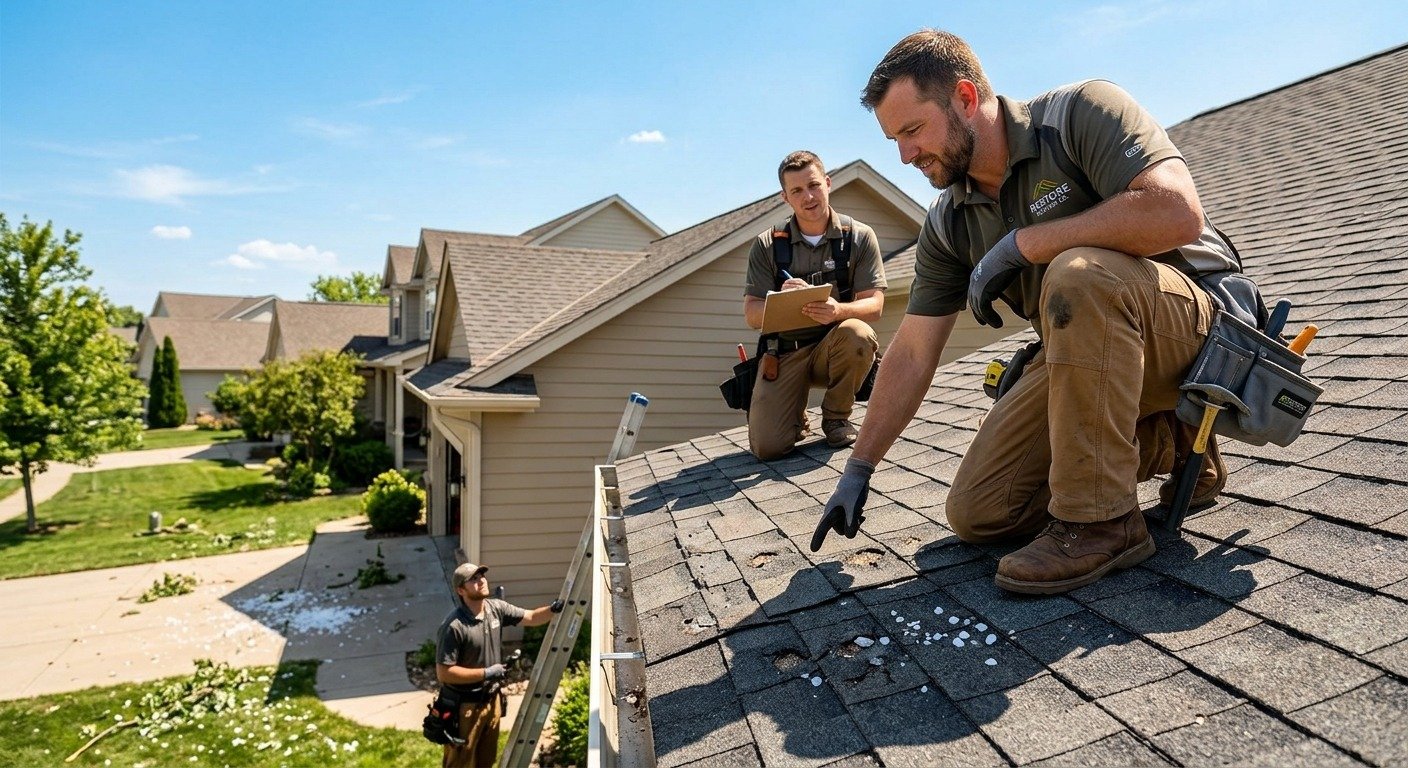
Hail damage shows up differently depending on the size of the hailstones, the angle of impact, and the materials used on your roof. Asphalt shingles, for example, often develop small dark spots where granules have been knocked loose, exposing the underlying material to the elements. Metal roofing tends to show visible dents or dimples. Wood shake roofs may split or crack along the grain.
Here are some of the most common signs to watch for:
- Granule loss: Check your gutters and downspouts for an accumulation of granules, which indicates shingles are losing their protective coating.
- Bruising: Soft spots on shingles that feel spongy to the touch often mean the mat beneath the surface has been compromised.
- Cracked or missing shingles: Larger hailstones can crack shingles outright or knock them loose entirely.
- Dented flashing or vents: Metal components around chimneys, vents, and skylights are especially vulnerable and often show damage before shingles do.
- Dings on gutters or siding: If you notice dents on your gutters, siding, or window frames, there’s a good chance your roof took a similar hit.
Because so much of this damage occurs on the roof itself, many homeowners don’t realize there’s a problem until it’s too late. That’s why a professional inspection after any significant hailstorm is one of the smartest moves you can make as a homeowner.
Why Hail Damage Gets Worse Over Time
A roof doesn’t need to be destroyed in a single storm to fail. Small cracks and granule loss might seem minor at first, but they expose the shingle’s underlayment to sun, moisture, and temperature swings. Over time, this accelerates wear and tear, shortens the lifespan of your roof, and increases the risk of leaks.
What starts as a cosmetic issue can quickly turn into a structural one. Water finds the smallest opening and works its way in, often causing damage to insulation, drywall, and even your home’s framing before you ever notice a drip inside. By the time stains appear on your ceiling, the problem has usually been building for weeks or months.
This is why prompt inspection and repair matter so much. Addressing hail damage early prevents small issues from snowballing into expensive repairs, and it also strengthens your position if you need to file an insurance claim.
How Insurance Claims Work for Hail Damage
Most homeowners’ insurance policies cover hail damage, but the process of filing a claim can feel overwhelming if you don’t know what to expect. Insurance adjusters typically look for specific, documented evidence of storm damage, which means timing and thorough documentation are critical.
Here’s a general overview of what the process looks like:
- Document the damage: Take photos of any visible damage to your roof, gutters, siding, and surrounding property as soon as it’s safe to do so.
- Schedule a professional inspection: A detailed inspection report from a roofing contractor adds credibility to your claim and ensures nothing gets overlooked.
- File your claim promptly: Many policies have time limits for reporting storm damage, so don’t wait.
- Meet with the adjuster: Having a roofing professional present during the adjuster’s visit can help ensure all damage is properly identified and accounted for.
- Review the settlement: Make sure the scope of repairs matches the actual damage before agreeing to a settlement.
Navigating this process alone can be frustrating, especially when insurance companies push back on claims. That’s where having an experienced roofing partner on your side makes a real difference.
Protect Your Home With a Trusted Roofing Partner
Catching the warning signs early can save you thousands of dollars down the road, and that starts with knowing exactly what to look for after a storm. Northstar Exterior and Roofing specializes in identifying and repairing hail damage before it turns into a bigger, costlier problem. Our team understands exactly what adjusters look for, and we work alongside homeowners throughout the entire claims process to make sure nothing gets missed.
From thorough inspections to expert repairs, Northstar Exterior and Roofing is committed to helping you protect one of your biggest investments. Whether you’ve just weathered a storm or you’re noticing unexplained leaks months later, our team has the experience to assess the damage accurately and recommend the right solution for your home.
A damaged roof doesn’t fix itself, and waiting only increases the risk of more expensive repairs later on. If you suspect your home has sustained storm damage, don’t leave it to chance.
Don’t Wait Until the Next Storm Hits
Hail damage can be deceptive, hiding beneath the surface until it causes real trouble. The best defense is a proactive one: know the signs, act quickly, and work with roofing professionals who understand how to navigate both the repair and insurance process.
If you suspect your roof has been affected by a recent storm, reach out to Northstar Exterior and Roofing today. Our team is ready to inspect your property, document the damage, and help you get your home back to full strength, before small problems turn into big ones.
FAQ
How soon after a hailstorm should I get my roof inspected?
It’s best to schedule an inspection within a few days of the storm. Prompt inspections help catch damage before it worsens and ensure you meet any time limits set by your insurance policy.
Can I inspect my roof for hail damage myself?
While you can check for visible signs like dented gutters or granules in your downspouts, roof inspections are best left to professionals who know exactly what to look for and can safely access the roof.
Will my insurance definitely cover hail damage?
Most homeowners’ policies include coverage for hail damage, but coverage details vary. A professional inspection report can strengthen your claim and help ensure you receive a fair settlement.
What happens if hail damage goes unrepaired?
Unaddressed hail damage can lead to leaks, mold growth, and structural issues over time, often resulting in far more expensive repairs than if the damage had been fixed right away.
FOR MORE VISIT: Wyf Meaning