20 Fascinating Facts About Tanzania
Tanzania is one of Africa’s most famous travel destinations, and its name is closely associated with some of the continent’s most iconic places, including Zanzibar, Mount Kilimanjaro, the Serengeti, and the Ngorongoro Crater. Travelers from around the world visit Tanzania to experience incredible wildlife, spectacular landscapes, rich cultures, and unforgettable adventures.
From the vast plains of the Serengeti to the beaches of Zanzibar, Tanzania offers far more than a traditional safari destination. A Luxury Tanzania Safari can take you through some of the country’s most remarkable wildlife areas while combining exceptional scenery, comfortable accommodation, and memorable experiences.
But how much do you really know about Tanzania? Here are some fascinating facts about the country that may surprise you.
1. Tanzania Is Home to Africa’s Tallest Mountain
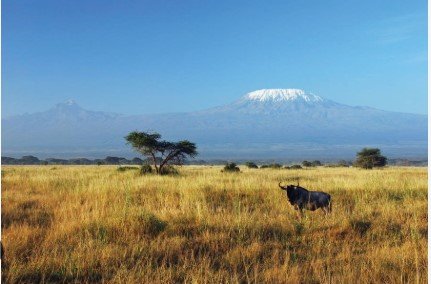
Mount Kilimanjaro is one of Tanzania’s most recognizable landmarks and the highest mountain in Africa. Its highest point, Uhuru Peak, stands at 5,895 meters above sea level.
What makes Kilimanjaro particularly remarkable is the variety of ecological zones found along its slopes. Climbers pass through cultivated areas, rainforest, heath and moorland, alpine desert, and eventually the cold environment near the summit.
Although you can admire Kilimanjaro from the ground, climbing the mountain offers travelers the opportunity to experience its changing landscapes and spectacular views firsthand.
2. More Than 1.5 Million Animals Take Part in the Great Migration
The Great Wildebeest Migration is one of the most extraordinary wildlife spectacles on Earth. More than 1.5 million wildebeest, together with large numbers of zebra and gazelles, move across the plains of Tanzania and Kenya in search of fresh grazing and water.
One of the most dramatic moments occurs when herds cross the Mara River. The animals must navigate strong currents, steep riverbanks, and waiting crocodiles as they continue their journey toward the northern Serengeti and Kenya’s Masai Mara.
3. A Large Part of Tanzania Is Protected for Wildlife
Tanzania is home to some of Africa’s most famous national parks and protected areas. The Serengeti National Park is perhaps the best known, famous for its vast grasslands, abundant wildlife, and role in the Great Migration.
The Serengeti supports huge populations of wildebeest, zebra, buffalo, elephants, giraffes, lions, leopards, cheetahs, gazelles, and other wildlife.
Tanzania is also home to other remarkable protected areas, including Nyerere National Park, Tarangire National Park, Gombe National Park, and many others. Gombe is particularly famous for the chimpanzee research carried out by Dr. Jane Goodall.
4. Lake Tanganyika Is One of the World’s Largest Lakes
Lake Tanganyika is one of the world’s largest freshwater lakes and is remarkable for both its depth and volume. It is shared by Tanzania, Burundi, Zambia, and the Democratic Republic of the Congo.
The lake is also an important ecosystem with remarkable biological diversity. Numerous rivers and streams feed it, while hundreds of fish species live in its waters.
Its enormous size and unique aquatic environment make Lake Tanganyika an important natural feature of Tanzania and the wider East African region.
5. Tanzania Is Famous for Tree-Climbing Lions
Some lions in Tanzania have developed the unusual habit of climbing trees. Tree-climbing lions are particularly associated with areas such as Tarangire National Park and other parts of northern Tanzania.
Exactly why these lions climb trees is still debated. Some theories suggest that they may climb to escape insects, enjoy cooler air, or simply rest in a comfortable position above the ground.
Whatever the reason, seeing a lion relaxing on a tree branch is an unusual and memorable safari experience.
6. Ngorongoro Crater Is a Remarkable Place to See Wildlife
The Ngorongoro Crater is one of Tanzania’s most extraordinary natural attractions. Located in northern Tanzania, the crater was formed by a massive volcanic event and now supports a remarkably diverse ecosystem.
Its enclosed environment provides excellent opportunities to see wildlife in a relatively concentrated area. Visitors may encounter lions, elephants, buffalo, leopards, rhinoceroses, zebras, wildebeest, gazelles, hippos, and many other species.
The crater is also one of the most famous places in Tanzania to look for the African Big Five.
7. Olduvai Gorge Is an Important Site in Human History
Olduvai Gorge is one of the most significant archaeological and paleoanthropological sites in Africa. Located in northern Tanzania, the gorge has produced important fossil and archaeological discoveries that have helped researchers understand early human evolution.
Fossils and stone tools discovered in the area date back millions of years, making Olduvai Gorge an important destination for anyone interested in archaeology, anthropology, and human history.
Its importance has earned the wider area a special place in the story of human origins.
8. Zanzibar Has a Complex History Linked to the Slave Trade
Zanzibar has a long and complex history shaped by African, Arab, Indian, Persian, and European influences. For centuries, the islands were an important center for trade across the Indian Ocean.
Unfortunately, this history also includes the slave trade. Stone Town was once an important center of the East African slave trade, and the former slave market is now an important historical site.
The slave market was closed in 1873 following pressure from the British. Today, visitors can learn about this difficult period of Zanzibar’s history through historical sites and museums in Stone Town.
9. Tanzania Is Home to Spectacular Waterfalls
Tanzania’s dramatic mountains, rivers, and varied landscapes have created numerous impressive waterfalls.
Materuni Waterfalls, located near Mount Kilimanjaro, is one of the best-known waterfalls for visitors in northern Tanzania. Reaching the waterfall involves a scenic walk through a beautiful natural environment, with views of surrounding vegetation and landscapes along the way.
Tanzania’s waterfalls offer a different way to experience the country’s natural beauty beyond traditional wildlife safaris.
10. The Shortest War in History Took Place in Zanzibar
The Anglo-Zanzibar War of 1896 is widely regarded as the shortest war in recorded history. The conflict lasted less than an hour, with estimates commonly placing its duration at around 38 to 45 minutes.
The dispute began after the death of Sultan Hamad bin Thuwaini and the succession of Sultan Khalid bin Barghash, who was not the candidate preferred by the British.
The British issued an ultimatum demanding that he step down. When he refused, British forces attacked the Sultan’s palace. The conflict ended very quickly, with the British achieving their objective.
Extra Facts About Tanzania
11. Baobab Trees Can Live for Centuries
Baobab trees are among Tanzania’s most distinctive trees. They can be seen in places such as Tarangire National Park, where their enormous trunks and unusual shapes create some of the country’s most recognizable landscapes.
Some baobabs are believed to have lived for hundreds or even thousands of years, although the exact ages of individual trees can be difficult to establish.
12. Tanzania Was Once Part of German East Africa
Before the First World War, much of present-day Tanzania was under German colonial rule and was known as German East Africa.
After Germany’s defeat in the First World War, the territory came under British administration. Tanganyika later gained independence in 1961.
13. Tanzania Is Linguistically Diverse
Tanzania is home to more than 100 languages and has remarkable linguistic diversity.
Swahili is the country’s most widely spoken national language and plays an important role in everyday communication and national identity. English is also widely used, particularly in education, tourism, business, and government.
14. Tanzania Has Both Africa’s Highest and One of Its Deepest Points
Mount Kilimanjaro provides Tanzania with Africa’s highest point at 5,895 meters above sea level.
At the other end of the scale, Lake Tanganyika is one of the deepest lakes in the world, with its deepest point reaching more than 1,400 meters below the surface.
Together, these geographical extremes demonstrate just how varied Tanzania’s landscapes are.
15. Freddie Mercury Was Born in Zanzibar
Freddie Mercury, the legendary lead singer of the rock band Queen, was born in Stone Town, Zanzibar, in 1946.
He was born Farrokh Bulsara to Parsi-Indian parents. His family later moved to the United Kingdom, where he eventually became one of the world’s most famous musicians.
Today, Freddie Mercury’s birthplace is one of the points of interest associated with Zanzibar’s rich history.
16. Tanzania Is Home to More Than 100 Ethnic Groups
Tanzania has remarkable cultural diversity, with more than 100 ethnic groups living across the country.
Each community has its own traditions, customs, history, and cultural practices. The Maasai are among the most internationally recognized communities, but Tanzania’s cultural landscape extends far beyond the Maasai.
This diversity is one of the reasons cultural experiences can be such an important part of traveling through Tanzania.
Final Thoughts
Tanzania is much more than a destination for wildlife safaris. It is a country of extraordinary landscapes, ancient history, diverse cultures, fascinating wildlife, and remarkable natural wonders.
From the snow-covered summit of Mount Kilimanjaro and the endless plains of the Serengeti to the wildlife-rich Ngorongoro Crater and the historic streets of Zanzibar, there is always something new to discover.
These are just some of the fascinating facts about Tanzania. Once you begin exploring the country, you quickly realize that its history, people, wildlife, and landscapes are just as impressive as its reputation suggests.