Quartz Events Sponsor Matching Companies: How B2B Event Sponsorship and Executive Matchmaking Work
Picture a booth at a big trade show. Thousands of people walk past. Your team scans hundreds of badges. A month later, you have a spreadsheet full of names and almost no real buyers.
That story is common in B2B event sponsorship. It is also the reason Quartz Events sponsor matching has caught the eye of so many sales and marketing leaders. Quartz Network runs invite-only summits where sponsor matching companies meet senior business executives in short, planned conversations. The goal is simple. Meet fewer people, but meet the right ones.
This guide explains how the sponsor matching model works. You will learn who takes part, what sponsors get, and how to judge the sponsorship ROI. You will also see where the model has limits. Read on, and you can decide if it fits your event marketing strategy.
What Are Quartz Events Sponsor Matching Companies?
The phrase sounds like a list of firms. It is not. It describes a B2B event organizers model run by Quartz Network, also known as Quartz Events. In this model, vendors called solution providers sponsor an event. The organizer then connects them with attendees who may need their products. Think of it as executive matchmaking for business.
Quartz says its events are built around one-to-one meetings between decision-makers and vendors. Its sponsorship page says sponsors get guaranteed, qualified meetings with pre-vetted buyers. That is a claim from the organizer. Treat it as a starting point and confirm the details in your contract.
Understanding the Quartz Network Business Model
Here is the basic deal. Senior executives join an invite-only community. They attend summits to learn from peers and meet vendors. Sponsors pay to take part and receive curated business meetings with those executives. Quartz sits in the middle as an executive matchmaking platform. It earns its income from the sponsors who want access.
The company has run events for more than 18 years. Its about page says its signature summits have gathered hundreds of thousands of leaders. It also says over 15,000 executives trust the network. Events run in person and online. They cover areas such as IT, finance, marketing, HR, and supply chain. This breadth lets one organizer serve many kinds of business decision-makers.
What Does Sponsor Matching Actually Mean?
Sponsor matching means pairing a vendor with a buyer before the event starts. The pairing uses real information. Executives share their business priorities and current projects. Sponsors share what they sell and who they want to meet. The organizer compares both sides and plans the meetings. This is how B2B event sponsorship moves from random luck to a planned process.
Compare that with a usual expo hall. Buyers wander and vendors wait. Quartz says it skips “wandering the exhibition hall” and connects people directly. Matching also differs from a basic app that lets attendees browse profiles. A true executive matchmaking program adds screening and human help. That extra care aims to make every meeting worth the time.
Who Participates in the Sponsor Matching Process?
Three groups take part. The first group is senior business executives. Depending on the summit, they include Chief Information Officers (CIOs), Chief Information Security Officers (CISOs), finance leaders, marketing leaders, and human resources leaders. Technology audiences often include Chief Technology Officers (CTOs) too. The second group is the sponsors. These are the solution providers who want qualified business leads. The third group is the Quartz team.
The Quartz team does more than run the stage. A concierge team screens new members and answers questions. Advisory boards of executives help shape agendas. For example, the CONNECT CMO event lists a Leadership Advisory Board made of executive leaders and experts. Their input keeps the topics useful. It also helps the event attract the right enterprise decision-makers.
How Does Quartz Events Sponsor Matching Work?
The process follows six steps. It starts months before the event. Executives share needs first. Sponsors then define the buyers they want. Quartz compares the two lists and plans the scheduled executive meetings. After that, the event adds extra ways to connect. The flow below shows the full path from start to finish.
| Step | Who Acts | What Happens |
| 1 | Executives | Share projects and priorities during registration |
| 2 | Sponsors | Define the ideal customer profile |
| 3 | Quartz | Finds relevant solution providers |
| 4 | Quartz and sponsors | Evaluate and qualify the matches |
| 5 | Both sides | Hold scheduled one-to-one meetings |
| 6 | Everyone | Join networking, sessions, and follow-up |
Quartz states it guarantees between 15 and 120 meetings for sponsors. The exact number depends on the package. Even so, a guaranteed slot is not a guaranteed sale. Your preparation still decides the outcome. That is why how B2B event sponsor matching works matters so much to your budget.
Step 1: Executives Share Their Business Priorities
The process begins with the buyer. During registration, each attendee shares business priorities, active projects, and business challenges. A CISO might list identity security and AI governance. A supply chain leader might list inventory visibility. Quisitive’s recap says meetings are matched to the priorities each attendee shares at registration. This step is the base of the whole model.
Step 2: Sponsors Define Their Ideal Customer Profile
Sponsors must also do homework. They define their Ideal Customer Profile (ICP). This includes target industry, company size, annual revenue range, job titles, and technology requirements. A clear profile helps the organizer pick better matches. A vague profile such as “any large company” leads to weak meetings. Good sponsors know exactly who they want to meet.
Step 3: Quartz Identifies Relevant Solution Providers
Next, Quartz looks at the sponsor list. It compares sponsor capabilities with each executive’s needs. A cloud security vendor fits a security leader with a cloud project. It does not fit a marketing chief. This is connecting solution providers with potential buyers in a focused way. The match depends on both the data and the judgment of the event team.
Step 4: Potential Matches Are Evaluated and Qualified
Not every match survives review. This is where executive participant qualification matters. Quartz says its attendees are pre-vetted and actively researching solutions. Sponsors should still ask how that vetting works. Does it check job title, purchasing authority, and project timeline? The better the target audience qualification, the better your qualified meetings will be.
Step 5: One-to-One Executive Meetings Are Scheduled
Once matches are set, meetings go on the calendar. Quartz meetings are short. One attendee called the 30-minute format great for explaining upcoming needs fast. Sponsors usually get attendee data upfront. That lets them research each person before the call. Preparation turns a quick slot into a real executive engagement moment.
Step 6: Additional Networking and Engagement Opportunities
Meetings are only one part of the event. Sponsors may also join roundtable discussions, executive networking sessions, and educational talks. These extras support thought leadership and brand visibility. They also create business relationship building moments between formal meetings. Think of the meetings as the main course and the networking as the table talk that follows.
What Types of Companies Can Become Quartz Event Sponsors?
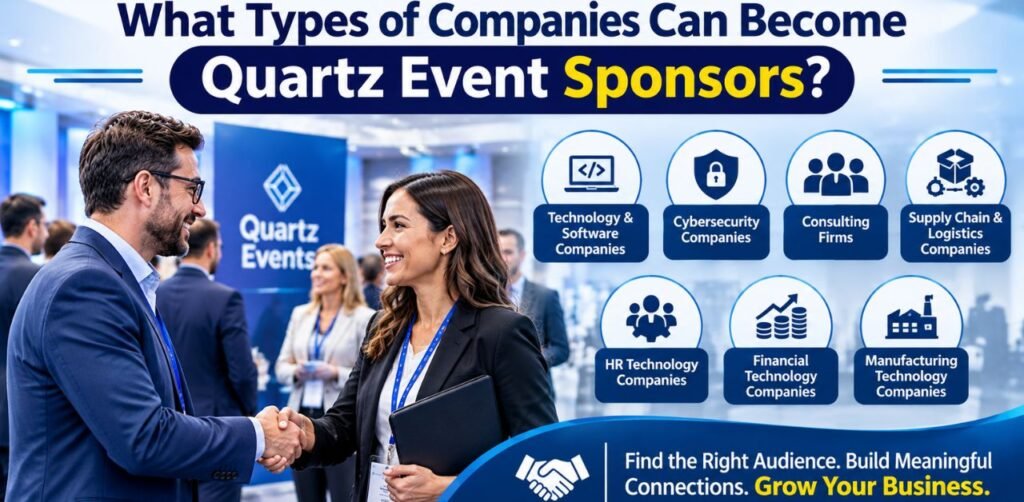
Most sponsors sell to one executive function. That could be IT, finance, HR, marketing, or supply chain. The match works best when your buyer sits in the audience. Company size matters less than product fit. A small firm with a strong solution can do well. A large firm with the wrong audience will struggle.
Below are the main groups. Each one links to event sponsorship opportunities built for a certain buyer. Use them as a guide to see where you might fit. The table that follows gives a quick view of each category and its likely audience.
| Sponsor Category | Typical Buyer | Example Products |
| Enterprise software | CIOs and technology leaders | Cloud platforms and automation |
| Cybersecurity and data | CISOs and data leaders | Identity security and analytics |
| HR technology | CHROs and talent leaders | Payroll and learning tools |
| Financial technology | CFOs and finance leaders | Payments and treasury systems |
| Supply chain and manufacturing | Operations and procurement leaders | Planning and warehouse systems |
| Services and consulting | Marketing and business leaders | Advisory and brand services |
Technology and Enterprise Software Companies
Enterprise software companies often have long sales cycles. Many people sign off on a purchase. Meeting a senior technology leader early can speed things up. Cloud, AI, and automation vendors fit well here. A short call can reveal a live project and a real budget. That is gold for sales pipeline development.
Cybersecurity and Data Analytics Companies
Cybersecurity companies need access to CISOs and security leaders. Data vendors need access to leaders who own analytics plans. The VISIONS summits focus on this audience. Topics include AI adoption, cyber risk, and modernization. A vendor who solves a clear problem can stand out in a 30-minute talk. Specific pain points beat broad claims every time.
HR Technology and Workforce Solutions Companies
HR technology companies sell to CHROs, talent heads, and learning leaders. Their buyers care about hiring, retention, and workforce planning. The CONNECT HR summits gather this group. A vendor with a clear story about reducing hiring time can win attention. Meetings let you hear real needs. Then you can tailor your follow-up.
Financial Technology and Banking Companies
Financial technology companies target CFOs and finance teams. Their products include payments, treasury, and planning software. The CONNECT CFO summits bring these leaders together. Finance buyers look for proof of savings and lower risk. A vendor who brings clear numbers can earn a second meeting. Banks and service providers can use the same format.
Supply Chain and Manufacturing Companies
Supply chain technology and manufacturing technology vendors fit the SCOPE and IMPACT summits. SCOPE was Quartz’s first event line, and a 2007 trade report described it as a limited-attendance show for senior executives. Quartz’s supply chain page lists topics such as demand planning, warehouse management, and procurement. These buyers want visibility and speed.
Marketing, Consulting, and Professional Services Firms
Consulting firms sell trust and skill. That makes a face-to-face talk very valuable. Marketing and service firms can meet CMOs and business leaders at CONNECT CMO. A strong meeting here feels like a first interview. You show that you understand the buyer’s problem. Then you suggest a small next step.
Which Quartz Events Match Different Business Industries?
Quartz groups its events into brands. Each brand serves a different executive role. Choosing the right one is half the battle. A great pitch at the wrong event goes nowhere. Start with your buyer and work backward to the summit.
Events run in person and online. They also run in North America and the UK. Dates change often. Always check the official Quartz events page for current schedules. For example, the CIO Leadership Summit is set for Marriott Marquis San Diego from March 30 to April 1, 2027. Its event page describes it as invite-only for senior tech leaders.
| Event Brand | Main Audience | Best For |
| VISIONS CIO + CISO | IT and security leaders | Software and security vendors |
| VISIONS Data Strategy & Analytics | Data and analytics leaders | Data platforms and AI tools |
| SCOPE Supply Chain | Supply chain and procurement leaders | Logistics and planning vendors |
| CONNECT CMO | Marketing leaders | Martech and brand services |
| CONNECT CFO | Finance leaders | Fintech and planning tools |
| CONNECT HR | HR leaders | Talent and workforce vendors |
VISIONS CIO + CISO
This is Quartz’s IT and security line. Quartz says VISIONS has served technology leaders for over 18 years. Summits ran in Atlanta and London in October 2026. They target CIOs, CISOs, IT directors, and digital leaders. Sponsors at past editions include Qualys, ThreatLocker, and Thales Cybersecurity, per a conference listing.
VISIONS Data Strategy & Analytics
Quartz’s site index lists this brand as a strategy and analytics forum. It suits data platform vendors and AI tool makers. Buyers here own data plans and reporting needs. Public detail on this event is thin. Ask Quartz for the current audience profile and dates before you commit.
SCOPE Supply Chain
SCOPE targets supply chain executives and procurement leaders. Quartz calls it the deal-making show for the field. It covers areas such as transportation, inventory, and sourcing. A past in-person edition ran in Orlando in October 2025. Vendors with clear savings stories tend to do well here.
CONNECT CMO
CONNECT CMO gathers marketing executives. Its agenda comes from a board of senior marketers. That means talks cover problems marketers actually face. A fall edition ran at the Hyatt Regency New Orleans in October 2026. Sponsors here sell tools for data, content, customer experience, and brand work.
See Also: hurtowezakupy.pl Explained: Website Overview, Shopping Guides, Categories, and Safety Review
CONNECT CFO
CONNECT CFO brings together finance executives. They look at payments, planning, treasury, and risk tools. Sponsors meet CFOs and finance directors in planned sessions. Finance buyers often ask for proof of return. Come ready with numbers and a short case study.
CONNECT HR
CONNECT HR is built for human resources leaders. Buyers include CHROs, talent heads, and learning leaders. Sponsors sell recruiting, payroll, engagement, and training tools. These leaders often juggle many projects. A clear message that saves them time can win a follow-up.
What Benefits Do Sponsors Receive From Quartz Events?
The main sponsor benefits are access and focus. You meet buyers who agreed to talk about solutions. You skip the crowd. You also get data about each person before you meet. For many B2B firms, this beats a large booth with weak traffic.
Quartz shares a few numbers on its sponsorship page. It says 97% of sponsors would recommend its events. It also says 99% of attendees plan to follow up with at least one vendor. These are the company’s own figures. Use them as signals and not as proof. Ask for references to check the results yourself.
Access to Senior Business Decision-Makers
Getting a meeting with a CIO or CFO is hard. Their calendars fill fast. Cold emails often go unread. At a curated summit, these leaders already set time aside to meet vendors. That makes business decision-makers more open. You gain executive networking access that would cost many weeks of outreach.
Pre-Scheduled One-to-One Meetings
Planned meetings remove the guesswork. You know who you will see and when. You can study their company before the call. Both sides arrive with a purpose. This is how scheduled business meetings generate sales opportunities instead of small talk. A good meeting can end with a demo date.
Better Understanding of Potential Customers
Sponsors often get attendee details upfront. These may include role, company, and stated needs. That helps you shape your pitch. You also learn what buyers worry about right now. Over many events, this builds a sharp picture of your market. It helps product, sales, and marketing teams alike.
Targeted B2B Lead Generation Opportunities
Targeted lead generation is the heart of the model. You trade volume for fit. Ten good talks can beat a thousand scanned badges. These contacts are qualified prospects with live needs. Strong strategies for improving B2B lead generation start with the right audience. Events like this supply it.
Thought Leadership and Brand Visibility
Sponsors can also share their expertise. Roundtables and sessions let you show how you think. This builds thought leadership and brand visibility with the same buyers you meet one-to-one. A smart talk makes the later meeting warmer. It shows you know the field, not just your product.
Understanding Sponsor Meeting Commitments
Read the contract closely. Know how many meetings the package includes. Ask what counts as a completed meeting. Ask what happens after a meeting cancellation. Quartz says meetings are guaranteed, but you should see the exact terms in writing. Clear rules protect your budget and set fair hopes.
Quartz Events Sponsor Matching vs. Traditional Event Sponsorship
Traditional event sponsorship sells exposure. You pay for a booth, a logo, or a speaking slot. The crowd decides your results. The sponsor matching model sells conversations. You pay for planned time with chosen buyers. One model aims at visibility. The other aims at business development opportunities.
Neither model is always better. A consumer brand may want wide fame. An enterprise vendor may want ten serious buyers. Your goal should lead your choice. The table below sets the two side by side so you can see the gaps.
| Factor | Traditional Sponsorship | Sponsor Matching |
| Main goal | Awareness and exposure | Qualified conversations |
| Audience contact | Open and random | Planned and targeted |
| Lead type | Many badge scans | Fewer and warmer contacts |
| Preparation | Often limited | Built on attendee data |
| Best fit | Broad brand campaigns | Complex B2B sales |
How Traditional Event Sponsorship Works
You buy a package. It may include a booth, banners, a slide in a keynote, or an ad in the program. Then you wait for visitors. Your team talks to whoever stops by. Some chats are great. Many are not. Results depend on foot traffic and luck.
How the Sponsor Matching Model Works
You pay for access, not for space. The organizer collects buyer needs first. Then it plans your meetings in advance. At the event, you walk into back-to-back talks with chosen people. Corporate event sponsorship becomes a schedule of curated business meetings. This is how companies connect with senior decision-makers at scale.
Key Differences in Audience Engagement and Lead Generation
In a crowd, you chase attention. In a matched meeting, you already have it. That changes the whole conversation. You skip the “what do you do?” stage and move to real needs. Why meeting quality matters more than attendee numbers is clear here. A few focused talks often yield more qualified business leads than a busy booth.
Which Sponsorship Approach Offers Better Business Value?
It depends on your goal. If you want fame, pick the traditional route. If you want pipeline, pick matching. Many firms use both over a year. Compare costs and likely outcomes, not just prices. This is the core of evaluating sponsorship packages and investment costs with a clear head.
Who Can Benefit Most From Quartz Events Sponsor Matching Companies?
The best fit has high deal values and long sales cycles. A single customer should be worth enough to pay for the trip. You also need a clear buyer role. When these pieces line up, a few meetings can change your quarter. When they do not, the cost may feel steep.
Below are five types of firms that often benefit. The pattern is the same for each. They sell to enterprise decision-makers. They need trust before a deal. And they can follow up well. Check whether your own firm matches these traits.
Enterprise B2B Technology Providers
Large tech vendors sell complex systems. Many stakeholders weigh in. Early contact with a senior sponsor of the project helps. A meeting can reveal who else must say yes. That map of buyers saves weeks. It also supports account-based marketing, since you can aim campaigns at named accounts.
Growing Software and SaaS Businesses
Young software firms need proof and fast growth. A planned meeting with a real buyer is a big win. These firms often have small teams. So each meeting must count. The main test is budget. If your deal size is small, run the math before you sign.
Cybersecurity and IT Service Providers
Security and IT buyers face constant pressure. They look for partners they can trust. A calm, expert talk can set you apart. IT service firms can also use meetings to learn about upcoming projects. Many deals begin with a simple question about a risk the buyer already feels.
Business Consulting and Advisory Firms
Consultants sell judgment. A direct talk with an executive shows that judgment fast. You can listen to a challenge and offer a fresh view. That builds commercial partnerships over time. Consulting buyers often move slowly. So plan for follow-up over months and not days.
Companies Selling to Enterprise Decision-Makers
Any firm that sells to senior leaders may gain. The key is a clear target. Know the role, the pain, and the budget. Then pick the event that gathers those people. Choosing the right executive networking event is simply a matter of matching your buyer to the room.
How to Evaluate Quartz Events Sponsor Matching Companies Before Investing
A smart sponsor asks hard questions first. Do not buy on a brochure alone. A good sponsor evaluation looks at the audience, the process, the terms, and the total cost. This habit protects your event marketing investment. It also prevents painful surprises later.
Use the steps below as a checklist. Take your time with each one. Write down the answers and compare events side by side. Doing this well is the heart of how to evaluate B2B event sponsorship opportunities. It can save you tens of thousands of dollars.
Define Your Ideal Customer Profile
Start inside your own company. Who buys from you today? Which titles sign the deal? What size are those firms? Write a one-page profile. Include industry, company size, annual revenue range, and key pain points. How sponsors identify their ideal customers shapes every later choice. Without it, even strong matching will drift.
Check How Executive Participants Are Qualified
“Qualified” can mean many things. One event may check only job titles. Another may confirm active projects and buying responsibilities. Ask Quartz how it screens attendees. Ask about seniority, company checks, and purchasing authority. The answers show whether you will meet real buyers or casual guests.
See Also: PostlyPress.com Review: Website Overview, Categories, Content, and Reader Guide
Evaluate the Event’s Target Audience
Look past the headline. Ask for lists of titles, industries, and company sizes. Compare them with your ICP. An event can sound perfect and still miss your buyer. The importance of audience relevance in event marketing is huge. A small, exact crowd beats a big, mixed one.
Understand the Meeting Matching Process
Learn who picks the meetings. Can you review profiles first? Can you reject a poor match? Can the attendee decline? A fair process builds trust on both sides. A forced meeting rarely goes well. Good matching rests on shared interest and clear data.
Review Sponsorship Packages and Contract Terms
Read every line. Check the number of guaranteed meetings. Check what extras are included, such as roundtables or concierge help. Look at rules for changes and refunds. Sponsorship packages differ widely. Quartz does not publish prices, so request a full quote in writing.
Check Previous Sponsor Experiences
Past sponsors are your best guide. Some publish their own recaps. For example, Iron Mountain and Quisitive wrote about their plans for VISIONS events. Ask Quartz for references too. Speak with a sponsor who sells something like your product. Their honest view is worth more than any brochure.
Calculate the Total Sponsorship Cost
The fee is only part of the bill. Add travel, hotels, staff time, and printed material. Add demos and follow-up work. Then divide by the deals you expect. This gives a rough customer acquisition cost. If it exceeds a deal’s value, rethink the plan.
How to Measure Quartz Events Sponsorship ROI
Many teams judge events by meeting counts alone. That is a mistake. Meetings are the start, not the finish. Good event performance measurement follows the whole journey. It tracks quality first, then follow-up, then pipeline, and finally money. Each stage tells you something different.
Plan your tracking before the event. Set up fields in your CRM. Agree on what a “qualified” meeting means. Then record the data as you go. This is the practical side of measuring the ROI of executive networking events. Without it, you will argue about results later with no facts.
| Stage | What to Track | Why It Matters |
| 1. Meeting quality | Role, need, timeline | Shows if the match was real |
| 2. Post-event engagement | Demos, second calls | Shows real interest |
| 3. Pipeline | Qualified leads and value | Shows sales potential |
| 4. Revenue | Closed deals and lifetime value | Shows true return |
Stage 1: Measure Executive Meeting Quality
Score each meeting right after it ends. Did you meet the right role? Was there a real problem? Did the person have purchasing authority? Was there a rough timeline? Give each meeting a simple score. This is one of the best ways to improve executive meeting quality, because it shows which matches work and which do not.
Stage 2: Track Post-Event Engagement
The first talk is only the opening. Watch what happens next. Count second meetings, demo requests, and introductions to other stakeholders. Track replies to your follow-up notes. Post-event engagement shows if interest was real. Strong post-event follow-up during the first week often decides the whole result.
Stage 3: Monitor Qualified Leads and Sales Pipeline
Now link meetings to your CRM. Count sales-qualified leads and qualified sales opportunities. Add up the pipeline value of each. This is how you start measuring post-event engagement and pipeline growth. Use the same rules your sales team uses all year. That keeps the numbers honest.
Stage 4: Measure Conversions and Revenue
Finally, track the sales conversion rate and closed revenue. B2B deals can take months or even a year. So measure at 90 days, 180 days, and 12 months. Also think about customer lifetime value. A deal that renews for years is worth far more than the first contract. This is how you measure revenue generated through event sponsorship.
A Simple ROI Framework for B2B Event Sponsorship
A good plan uses three cases. Build a low case, a middle case, and a high case. Use your own past sales data for the math. Never plan only for the best result. Leaders trust a range far more than a single hopeful number.
The example below is illustrative. It is not Quartz data. It assumes a total cost of $60,000 and an average deal of $50,000. Swap in your own numbers. The formula is simple. Return on Investment (ROI) equals revenue minus cost, divided by cost.
| Scenario | Meetings | Qualified Opportunities | Pipeline Value | Deals Won | Revenue | Cost per Deal | ROI |
| Conservative | 20 | 3 | $150,000 | 0.6 | $30,000 | $100,000 | -50% |
| Expected | 40 | 10 | $500,000 | 2 | $100,000 | $30,000 | 67% |
| Strong | 60 | 18 | $900,000 | 4.5 | $225,000 | $13,333 | 275% |
Conservative Sponsorship ROI Scenario
Here, few meetings turn into real opportunities. Only 3 of 20 qualify, and the win rate is low. The event loses money in year one. That is a real possibility. Yet even this case may pay off later if the deals renew or grow. It is your downside shield.
Expected Sponsorship ROI Scenario
This case uses your normal numbers. Forty meetings yield ten qualified opportunities. Two close at a typical rate. Revenue passes cost, and ROI lands near 67%. Most planning should lean on this view. It shows what a solid, well-run program can deliver for a firm like yours.
Strong Sponsorship ROI Scenario
In the best case, great matches meet a well-prepared team. Many talks become pipeline, and several deals close. The return is large. But do not count on it. Treat it as the upside. If you reach it, study why. Then repeat those steps at the next event.
See Also: Sporterradaily.com NBA: A Complete Guide to Basketball News, Scores, Stats, and Game Analysis
Why Your Ideal Customer Profile Matters in Sponsor Matching
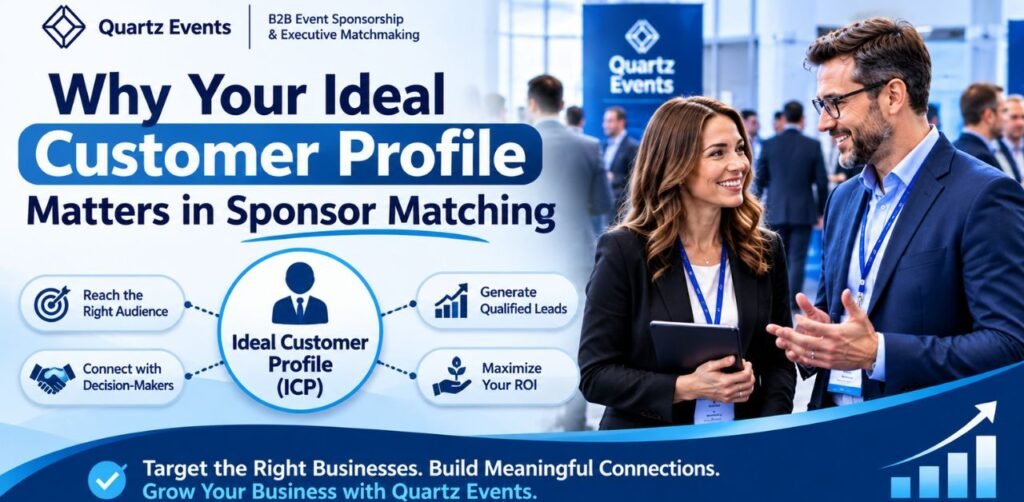
Your ideal customer profile is the steering wheel of the whole program. It tells the organizer who to bring to your table. It tells your team what to say. It even shapes how you measure success. A weak profile creates weak matches, no matter how smart the system is.
Treat your ICP as a living document. Update it after every event. Note which buyers converted and which did not. Over time, your profile gets sharper. Better profiles lead to better matches and stronger sales pipeline development. It is a loop that rewards patience.
Identifying the Right Industries and Business Sizes
Study your best customers. Which industries buy fastest? Which company sizes stay longest? Mid-size firms may buy faster than giants. Some sectors may have stricter rules that slow a sale. Pick the target industry and size where you win most often. Then tell Quartz clearly so it can aim your meetings there.
Understanding Decision-Maker Roles and Responsibilities
Titles can mislead. Two CIOs may hold very different power. One may own the budget. Another may only advise. Learn who has purchasing authority in your deals. Also learn who influences or blocks a sale. Building relationships with enterprise decision-makers starts with knowing their real role.
Matching Business Challenges With Your Solutions
Great meetings start with a shared problem. List the top three problems you solve. Then match them with the challenges buyers state at registration. A cloud vendor should chase leaders with cloud plans. This is how turning business conversations into commercial opportunities begins. Fit comes first, and the pitch follows.
How Sponsors Should Prepare for Executive Meetings
A meeting slot is short. Thirty minutes goes fast. That means every minute counts. Prepared teams ask better questions. They listen more than they talk. They also leave with a clear next step. Unprepared teams waste a rare chance.
Treat each meeting like a small project. Assign a lead and a note-taker. Review attendee data a day or two before. Set one goal per meeting. These habits answer the question of how to prepare for executive-level business meetings. They also make your team look sharp and caring.
Research Executives Before the Event
Learn the person’s role, company, and recent news. Read the notes they gave at registration. Check the company’s latest goals. Look for common ground, such as a shared tool or past project. A little research shows respect. It also lets you skip basic questions and dive into real topics.
Focus on Business Needs and Discovery Questions
Open with questions, not slides. Ask about current priorities. Ask what slows them down. Ask who else joins the decision. Executives value listeners. Good discovery turns a chat into a map of the deal. You learn the problem first. Then your solution can speak to it directly.
Avoid Generic Sales Presentations
A pitch made for everyone fits no one. Senior leaders can spot a canned talk in seconds. Tailor your words to each person. Use their language and their examples. Keep slides to a minimum. One strong story about a similar customer will do more than twenty features.
Prepare Relevant Solutions and Case Studies
Bring proof that fits the buyer. If you meet a retailer, share a retail result. Keep each case study short. State the problem, the fix, and the gain in numbers. Have a one-page summary ready to send. Proof builds trust fast. It also gives the executive something to share with their team.
Agree on Clear Follow-Up Actions
End every meeting with a next step. It could be a demo, a second call, or an intro to a colleague. Put a date on it. Send a short thank-you note the same day. Clear actions keep deals alive. Without them, even a great meeting fades within a week.
Common Mistakes Companies Make With Event Sponsorship
Most failed sponsorships share the same flaws. They are rarely about the event itself. They come from weak planning and thin follow-up. The good news is that each mistake is easy to fix. A little care before you sign can change the outcome.
Read the list below as a warning guide. Check your own plan against each item. If you see a match, fix it now. Small changes can lift your sales conversion rate a lot. They also protect your event marketing strategy from avoidable waste.
Choosing an Event Based Only on Audience Size
Big crowds look exciting. But more people does not mean more buyers. A room of 5,000 may hold only ten of your targets. A room of 200 may hold fifty. Relevance beats volume every time. Ask for the audience mix and not just the total.
Having an Unclear Target Customer Profile
If you cannot name your buyer, no one else can. Vague goals produce vague matches. Teams then complain the event “did not work.” The fault was the brief. Spend a week on your ICP before you choose an event. It is the cheapest fix in this list.
Assuming Meetings Guarantee Sales
A meeting opens a door. It does not close a deal. Buyers still compare vendors. They still need budget and approval. Sellers who expect quick wins often feel let down. Set honest goals. Aim for qualified pipeline first, and treat revenue as the later result.
Sending Unprepared Sales Representatives
Executives expect a smart, calm partner. A rep who reads from a script hurts your brand. Train your team before the event. Run mock meetings. Share attendee notes. Send people who can talk about business problems and not just product features.
Using the Same Pitch for Every Executive
A CFO and a CISO care about different things. One wants savings and the other wants safety. A single pitch cannot serve both. Prepare short variations. Change the opening, the proof, and the ask. Small edits show you listened and raise your odds of a second talk.
Failing to Follow Up After Meetings
Speed matters. Interest cools fast after an event. Many sponsors wait weeks to write. By then the buyer has moved on. Plan your follow-up before you travel. Draft templates. Book time on calendars. Good post-event follow-up within 48 hours keeps momentum alive.
Measuring Only Lead Volume Instead of Lead Quality
A long list of names looks impressive in a report. But it hides weak results. Track quality instead. Count real opportunities and their value. Count deals won. Lead quality tells the true story of your event marketing strategy. Volume alone can fool even a smart team.
Quartz Events Sponsor Matching vs. Cold Outreach
Cold outreach means contacting buyers who do not know you. It uses email, calls, and social messages. It scales well and costs little per touch. But replies are rare. Senior leaders get dozens of messages each day. Most go unread. Cold outreach needs many tries to land one meeting.
Sponsor matching starts from a warm place. The executive already agreed to meet vendors. You arrive with a reason to talk. That does not replace outbound work. The two methods help each other. A met executive is far likelier to answer your next email. The table below compares the main points.
| Factor | Cold Outreach | Quartz Sponsor Matching |
| Starting point | Unknown contact | Agreed meeting |
| Executive access | Hard to win | Scheduled in advance |
| Cost model | Low per touch | Higher upfront fee |
| Lead quality | Mixed | Often more qualified |
| Scale | High volume | Limited seats |
Differences in Prospecting and Audience Targeting
With cold outreach, you build your own lists. You hunt for emails and titles. It takes time. With matching, the organizer supplies the audience. You still set the target, but the pool is ready. This saves hours of research. It also lets sellers focus on talking and not finding.
Meeting Preparation and Executive Access
Cold calls often start with no context. You guess at needs. In matched meetings, you can read the buyer’s stated priorities first. That gives you a head start. The executive also knows who you are. Both sides sit down with a purpose. That is hard to copy through an email chain.
Lead Quality and Sales Conversion Potential
Warm contacts tend to convert better than cold ones. They have shown interest and set time aside. That said, no method guarantees results. Track both channels in your CRM. Compare sales-qualified leads, cost, and speed. Let your own data decide how to split your budget between the two.
How AI Is Changing B2B Event Sponsor Matching
Artificial intelligence is changing business event networking across the industry. It can scan large sets of profiles quickly. It can spot patterns that people may miss. Many event networking platforms now claim smarter pairing. Still, quality depends on the data. Poor data makes poor matches, even with clever tools.
Quartz’s public pages describe matching based on priorities shared by attendees. They do not detail any AI tools. So treat the points below as industry trends and not as confirmed Quartz features. Ask the team directly how technology supports its process. How AI improves business event matchmaking is a fair question to raise on your first call.
AI-Powered Audience Research
AI can read many data points at once. It can group buyers by topic, role, and project type. This helps sponsors see who is worth meeting. It also helps organizers build better guest lists. Good AI-powered matchmaking begins with clean, honest data. Weak inputs always lead to weak insights.
Automated Executive and Sponsor Matching
Software can score every possible pair and rank them. This saves huge amounts of time at scale. It can also flag matches a human might miss. But it cannot sense mood or context. Auto-matching works best as a first draft. Then a person checks it and fixes odd pairings.
Data-Driven Meeting Recommendations
Some systems offer automated meeting recommendations. They suggest who to meet and why. They may also propose talking points. This helps teams prepare faster. Still, sponsors should add their own notes. A tool can point the way, but your insight wins the room.
The Role of Human Judgment in Better Matches
People bring care that code cannot. A concierge can sense when an attendee wants a quiet chat. They can fix a bad fit on the spot. Quartz highlights its concierge team in its membership process. The best programs blend smart tools with human judgment. That mix creates the strongest improving sales opportunities through curated networking.
How to Choose the Right Quartz Events Sponsorship Opportunity
You now have the pieces. The last step is to choose. Use five simple filters. Score each event on a scale of one to five for each filter. Add the totals. The highest score is often the best pick. It is a quick way to stay objective.
Be honest with the scores. Do not let a famous name sway you. Do not let a nice city sway you either. Focus on buyers, meetings, and returns. This approach brings order to choosing the right executive networking event. It also gives you a clear story to share with your leaders.
1. Audience Relevance
Does the audience match your ICP? Check titles, industries, and company sizes. Ask for a recent attendee profile. If at least half the room fits your buyer, that is a strong sign. If only a few do, look elsewhere. Relevance is the base of every good result.
2. Executive Meeting Quality
Check how meetings are chosen and vetted. Ask about average seniority and active projects. Ask how many meetings happen per sponsor. Quality beats count. A smaller number of sharp talks can still outperform a longer schedule of weak ones.
3. Commercial Fit
Compare cost with deal size. If one deal can repay the whole fee, the risk is lower. If you need five deals to break even, be careful. Run the three-scenario model from earlier. Make sure even the low case does not harm your budget too much.
4. Sales Team Readiness
Can your team handle executive talks? Do you have case studies ready? Do you have a follow-up plan? A brilliant event cannot rescue a weak process. If your team needs training, do it before you sign. Ready teams turn meetings into qualified sales opportunities.
5. Performance Measurement
Decide how you will track results before you go. Set up CRM fields. Pick your metrics. Agree on review dates. Ask Quartz what reports you will receive. Clear tracking shows if the event worked. It also tells you whether to return next year.
Questions to Ask Before Signing a Quartz Sponsorship Agreement
A contract is easier to change before you sign. Bring a list of questions to your call. Take notes on every answer. Ask for key answers in writing. This protects you and builds trust with the organizer. Good partners welcome detailed questions.
Below are six key questions. They cover people, promises, and proof. They match the issues that cause most disputes. Use them as a script. Add your own questions about price, timing, and competitors in the room.
How Are Executive Participants Selected?
Ask how Quartz invites and screens attendees. Quartz says new members apply through a short call with its concierge team and must meet eligibility rules. Ask for those rules. Ask how titles and companies are checked. Clear answers show real executive participant qualification. Vague ones should raise a flag.
Are Meetings Guaranteed or Subject to Availability?
Quartz says it guarantees a set number of meetings. Ask what “guaranteed” means in detail. Does it include no-shows? Is there a minimum quality bar? Get the number in writing. A promise without terms is only a hope. Clear terms keep both sides fair.
What Happens If a Scheduled Meeting Is Canceled?
Executives sometimes cancel. Ask how Quartz handles that. Is there a replacement meeting? Is there a credit? How fast is the swap? A clear meeting cancellation policy protects your investment. It also shows the organizer cares about your results and not just the sale.
What Information Do Sponsors Receive Before Meetings?
Ask what you will see before each call. Quartz says sponsors receive extensive data upfront. Learn what that includes. It may cover name, role, company, and stated needs. The more detail you get, the better you can prepare. Ask when the data arrives, too.
What Is Included in the Sponsorship Package?
List every item in the offer. Meetings, networking passes, speaking slots, and concierge help may all differ by tier. Ask about extras such as roundtable discussions. Ask about costs not in the base fee. A complete list helps you compare packages and avoid hidden charges.
How Is Sponsorship Performance Measured?
Ask what reports Quartz provides after the event. Will you get meeting lists, feedback scores, or contact data? Ask how long you can access them. Compare their data with your own CRM numbers. Shared metrics make reviews easier. They also help you decide on a repeat sponsorship.
Frequently Asked Questions
What Are Quartz Events Sponsor Matching Companies?
The phrase describes the sponsor matching model run by Quartz Network. Vendors sponsor invite-only summits. The organizer then connects them with relevant executives through planned one-to-one meetings. It is a form of B2B event sponsorship built around conversations and not booth traffic.
Is Quartz Events the Same as Quartz Network?
In practice, yes. Public sources use both names for the same organizer. A 2007 trade article refers to Quartz Events. Its current website uses Quartz Network. Some sources also list Quartz Events LLC as the legal name. When in doubt, confirm the exact business name in your contract.
How Does Quartz Network Match Sponsors With Executives?
Attendees share their needs and projects at registration. Sponsors share their target profile. Quartz compares both and plans meetings. Public pages describe matching based on stated priorities. They do not give a full formula, so ask the team for details on how final pairings are chosen.
What Companies Can Sponsor Quartz Network Events?
Any firm that sells to the event’s executive audience may apply. Common sponsors include software, security, HR, finance, and supply chain vendors. Consulting and service firms also take part. Fit matters more than size. Your product must solve a problem the attendees actually have.
How Many Meetings Can Quartz Sponsors Receive?
Quartz states that it guarantees between 15 and 120 meetings. The number depends on the package and the event. These figures come from Quartz’s own sponsorship page. Ask for the exact count in your contract, along with rules for cancellations.
Are Quartz Network Events Invitation-Only?
Yes. Quartz describes its summits as invite-only for executives. Attendees apply through a short call with a concierge team and meet eligibility rules. This screening is meant to keep the audience senior and relevant. Sponsors should still ask how strictly the rules are applied.
Is Quartz Network Suitable for Small B2B Companies?
It can be, if your deal value is high enough. Quartz does not publish prices, so you must request a quote. Run the ROI model with your own numbers. If one or two deals can repay the cost, the model may fit. If not, other channels may suit you better.
Do Sponsor Matching Meetings Guarantee Sales?
No. Meetings guarantee a conversation and not a purchase. Results depend on your product, price, team, and timing. Buyers also compare rivals. Treat meetings as a strong start to sales pipeline development. Then work the follow-up with care.
Is Sponsor Matching Better Than Traditional Event Sponsorship?
It depends on your goal. Matching suits firms that want qualified prospects and direct talks with leaders. Traditional sponsorship suits firms that want wide brand visibility. Many companies mix both across a year. Compare costs and likely outcomes before choosing.
How Should Companies Measure Event Sponsorship ROI?
Track four stages. First, score meeting quality. Second, watch post-event engagement. Third, count qualified leads and pipeline value. Fourth, measure closed revenue and customer lifetime value. Compare these with your total cost. Review at 90 days, 180 days, and one year.
What Should Sponsors Do After an Event?
Move fast. Send a thank-you note within 48 hours. Log each meeting in your CRM. Book the agreed next steps. Share useful content with each contact. Then track every lead through the pipeline. Strong post-event follow-up is often what separates good results from poor ones.
Final Thoughts
Quartz Events sponsor matching offers a different path for B2B event sponsorship. It swaps crowds for conversations. It gives solution providers planned time with senior business executives. For firms with complex products and big deals, that can be a smart trade. But the model is not magic. Its success rests on your preparation.
Before you invest, do three things. Define your ideal customer profile. Ask hard questions about how attendees and meetings are chosen. Set up tracking so you can measure sponsorship ROI from first meeting to closed revenue. Ask Quartz for the attendee profile before you sign. That one request can save you time, money, and doubt.